Pre-Trip Seasonal Vehicle Checklist: Preparing for Long-Distance Travel
A breakdown hundreds of miles from home turns a planned journey into a costly ordeal. This checklist helps you verify critical systems in your driveway before you load the vehicle and head out.
Tires, Wheels, and Alignment
Start with tire pressure checked cold — including the spare if accessible. Under-inflation increases heat buildup at highway speeds and raises the risk of blowouts on fully loaded vehicles. Compare readings to the placard on the driver door jamb, not the maximum pressure molded into the sidewall.
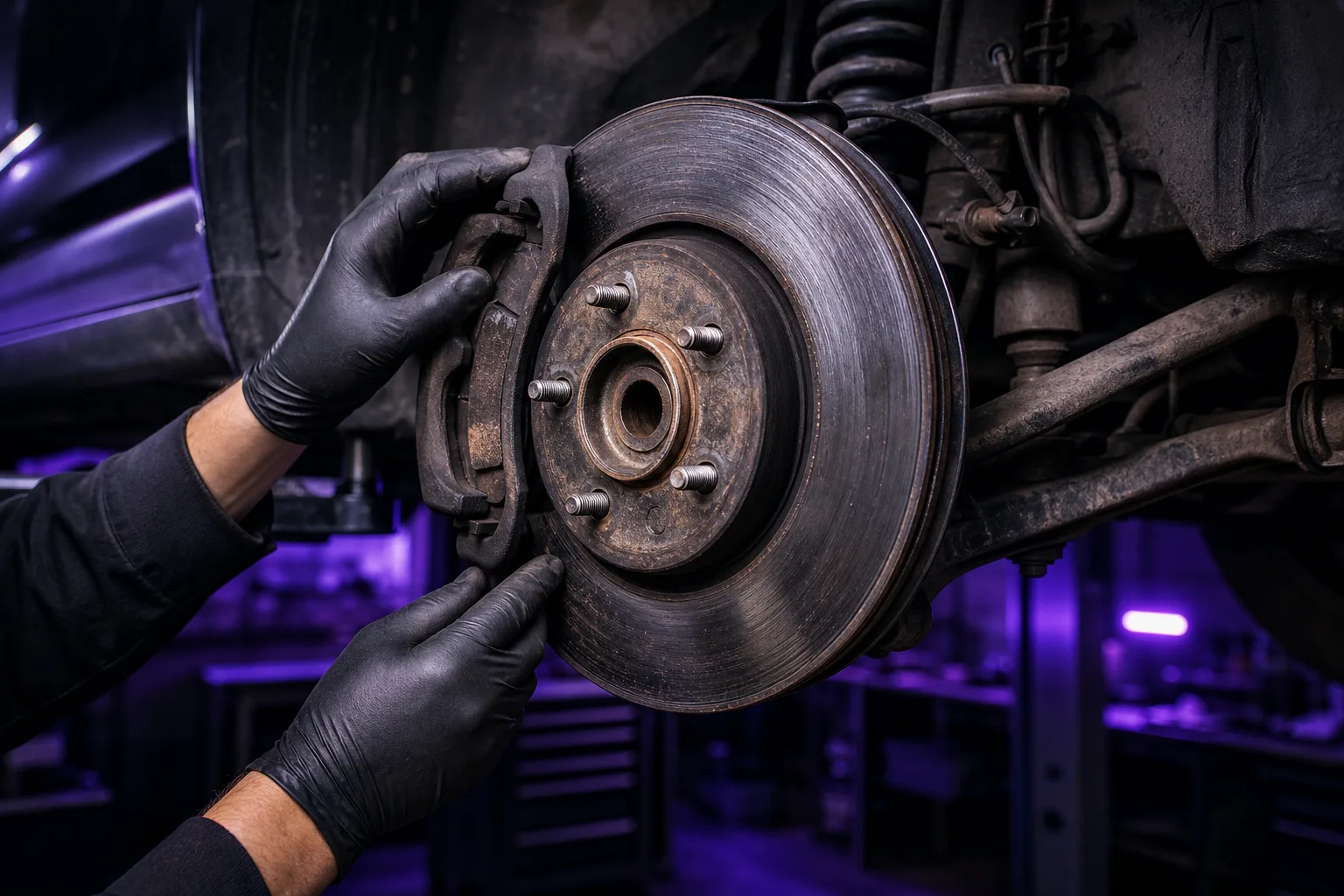
Inspect tread depth with a gauge or penny test; uneven wear patterns suggest alignment or suspension issues that worsen over long distances. Confirm lug nuts are torqued to specification, especially if wheels were recently removed. Look for sidewall bulges, cuts, or embedded objects that could fail under sustained load.
Fluids, Filters, and Leaks
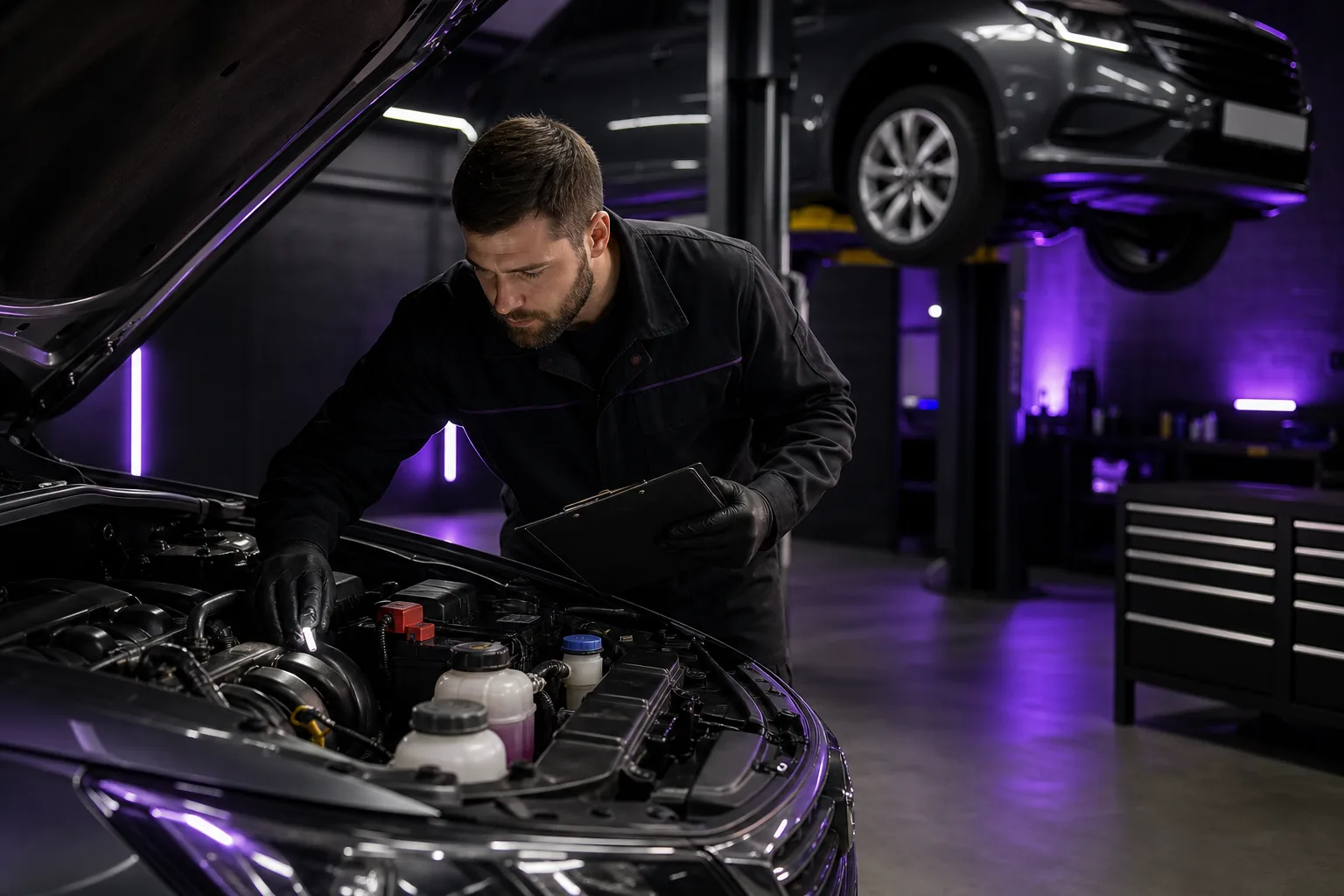
Verify engine oil, coolant, brake fluid, power steering fluid, and windshield washer levels. Low coolant with no visible leak may indicate a slow head gasket seep or evaporation through a weak cap seal — both deserve attention before extended driving.
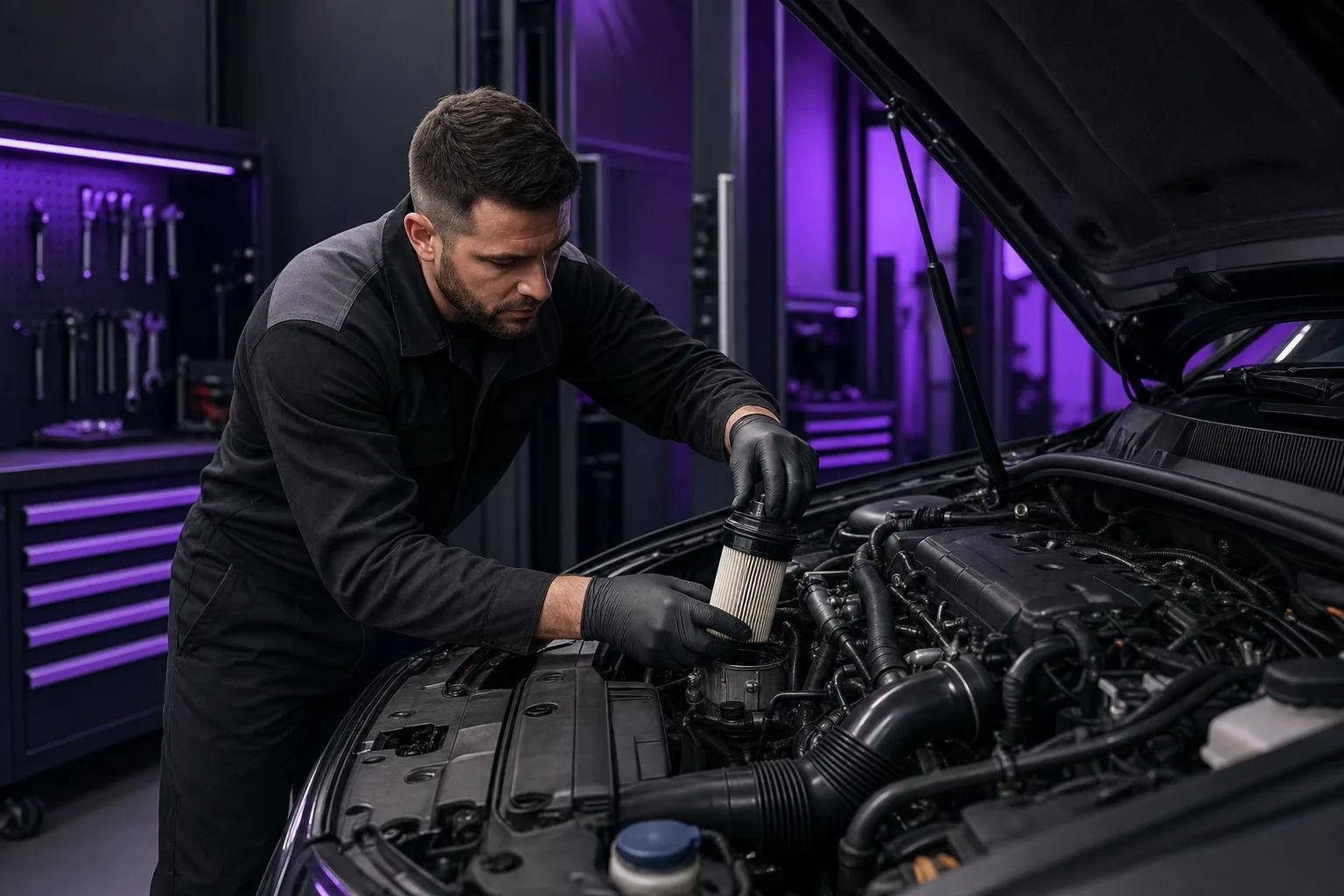
Check beneath the vehicle for fresh oil, coolant, or transmission fluid stains on the pavement. A small seep can become a major loss over consecutive hours at highway RPM. Replace the engine air filter if it appears clogged; restricted airflow reduces fuel economy and increases engine load during mountain grades.
Battery and Electrical Systems
Batteries older than three years should undergo a load test before a long trip. Corrosion on terminals increases resistance and can prevent starting after an overnight stop in unfamiliar territory. Clean terminals and verify cable clamps are tight.
Test all exterior lights — headlights, brake lights, turn signals, and license plate illumination. Replace any burned bulbs before departure. Confirm the horn, wipers, and defroster operate correctly; sudden weather changes during travel are common across regional routes.
Cooling System and Climate Readiness
Inspect radiator hoses for swelling, cracking, or soft spots near clamp connections. Squeeze upper and lower hoses when the engine is cold — they should feel firm, not mushy. Confirm the radiator fan engages during idle after the engine reaches operating temperature.
If traveling through varied climates, verify that the HVAC system produces cold air and that the heater core delivers warm airflow. A weak A/C system may indicate low refrigerant or a failing compressor clutch — both are easier to address at home than mid-route.
Emergency Kit and Final Steps
- Pack jumper cables, a flashlight, basic hand tools, and a tire pressure gauge.
- Include a first-aid kit, reflective triangles, and a charged mobile power bank.
- Carry physical maps or downloaded offline navigation as backup to cellular coverage gaps.
- Store water and non-perishable snacks for each passenger on routes through remote areas.
- Schedule a professional multi-point inspection if the vehicle has not been serviced within the past six months.
Our workshop offers pre-trip inspections that cover all items on this list with measured data rather than visual estimates alone. Book an inspection before your next long journey.