Diesel Engine Preventive Maintenance: Fluids, Filters, and Turbo Care
Diesel engines reward disciplined maintenance with long service life and strong torque output. Neglecting fluid quality or filter schedules, however, accelerates wear on injectors, turbochargers, and emission control hardware.
Engine Oil and Filter Intervals
Diesel combustion produces more soot than gasoline, which contaminates oil faster and reduces lubrication efficiency. Manufacturer intervals assume normal duty cycles — frequent towing, idling, or short trips shorten effective oil life dramatically.
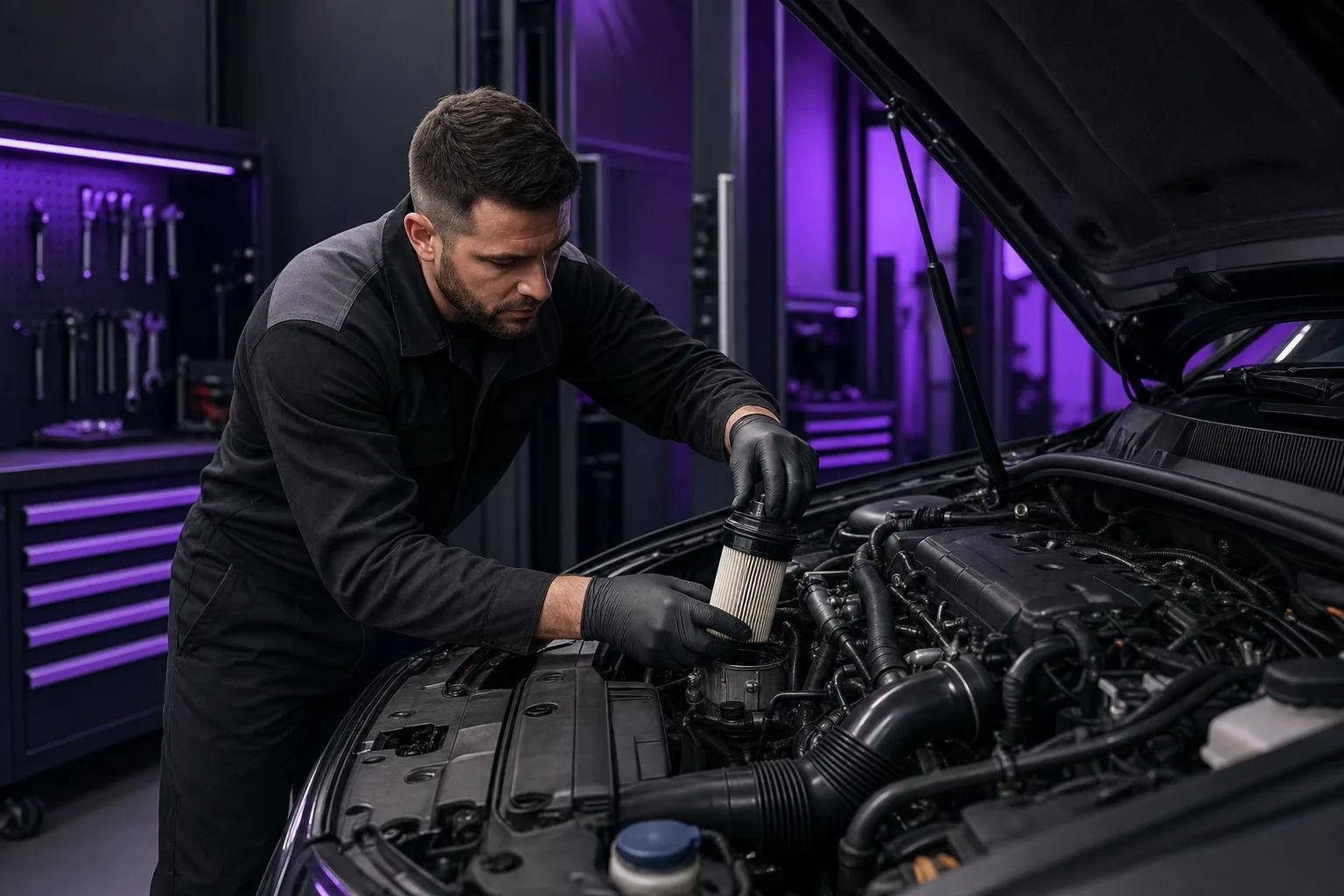
Use oil rated for diesel applications with the correct viscosity for your climate. Replace the oil filter at every change; a restricted filter bypasses unfiltered oil through relief valves and allows abrasive particles to circulate through bearings and turbo supply lines.
Fuel System and Filter Maintenance
Modern common-rail injectors operate at extremely high pressure with tight tolerances. Water or particulate contamination causes pitting on injector tips and erratic spray patterns that reduce power and increase emissions.
Primary and secondary fuel filters should be replaced according to service schedules — often more frequently in regions with biodiesel blends or seasonal fuel formulation changes. Drain water separators during cold months to prevent ice formation in fuel lines.
Turbocharger Health and Cool-Down Habits
Turbochargers spin at tens of thousands of RPM and rely on clean oil for both lubrication and bearing cooling. Shutting the engine off immediately after heavy load starves the turbo of oil flow while components are still at operating temperature.
After towing or sustained highway driving, allow the engine to idle for thirty to sixty seconds before shutdown. Listen for bearing whine under boost — early detection prevents catastrophic turbo failure and downstream contamination of the intake tract.
Coolant, DEF, and Emission Systems
Diesel engines run higher compression ratios and generate significant heat. Coolant degrades over time and loses corrosion inhibitors that protect aluminum heads, EGR coolers, and heater cores. Test coolant pH and freeze protection annually.
Vehicles equipped with Selective Catalytic Reduction require Diesel Exhaust Fluid at proper concentration. Low DEF levels trigger reduced power modes on many platforms. Use manufacturer-approved fluid and store containers away from temperature extremes that degrade urea content.
Building a Maintenance Schedule That Matches Your Use
- Log mileage and service dates — diesel wear patterns correlate strongly with duty cycle, not calendar time alone.
- Inspect intercooler boots and clamps for oil staining that indicates turbo seal wear.
- Monitor exhaust color: black smoke suggests over-fueling, blue indicates oil consumption, white may signal coolant intrusion.
Our workshop provides diesel-specific maintenance plans tailored to fleet and personal use. Contact us to review your vehicle's service history and build a preventive schedule.