Early Brake Wear Warning Signs Every Driver Should Recognize
Brake systems rarely fail without warning. Learning to read the early signals — through pedal response, sound, and steering behavior — helps you schedule service before stopping distance increases dangerously.
Changes in Pedal Feel
A healthy brake pedal feels firm and consistent, with minimal travel before braking force engages. A pedal that sinks toward the floor — especially at a stoplight — may indicate fluid leaks, air in the hydraulic lines, or worn brake pads that have over-extended caliper pistons.
A high, hard pedal that requires excessive leg pressure often points to brake booster vacuum issues or seized caliper slides preventing even pad contact. Any change in pedal travel or resistance warrants inspection, even if no warning light appears on the dashboard.
Sound Patterns and What They Indicate
Many brake pads include wear indicators — small metal tabs that contact the rotor surface when pad material reaches minimum thickness. The resulting high-pitched squeal during light braking is intentional and means replacement should be scheduled soon.
Grinding or growling sounds indicate metal-on-metal contact between the backing plate and rotor, which damages the rotor surface and increases repair cost. Clicking during low-speed turns often traces to loose caliper hardware or worn pad shims rather than pad wear itself.
Steering Pull and Pedal Pulsation
A vehicle that drifts left or right under braking usually has uneven pad wear, a stuck caliper piston, or contaminated friction material on one side. This condition reduces straight-line stability and lengthens stopping distance on wet surfaces.
Pedal pulsation felt through the foot during moderate stops typically signals rotor thickness variation — often called warping, though the root cause is usually uneven lug nut torque, corroded hub faces, or overheating from prolonged downhill braking.
Visual Checks You Can Perform
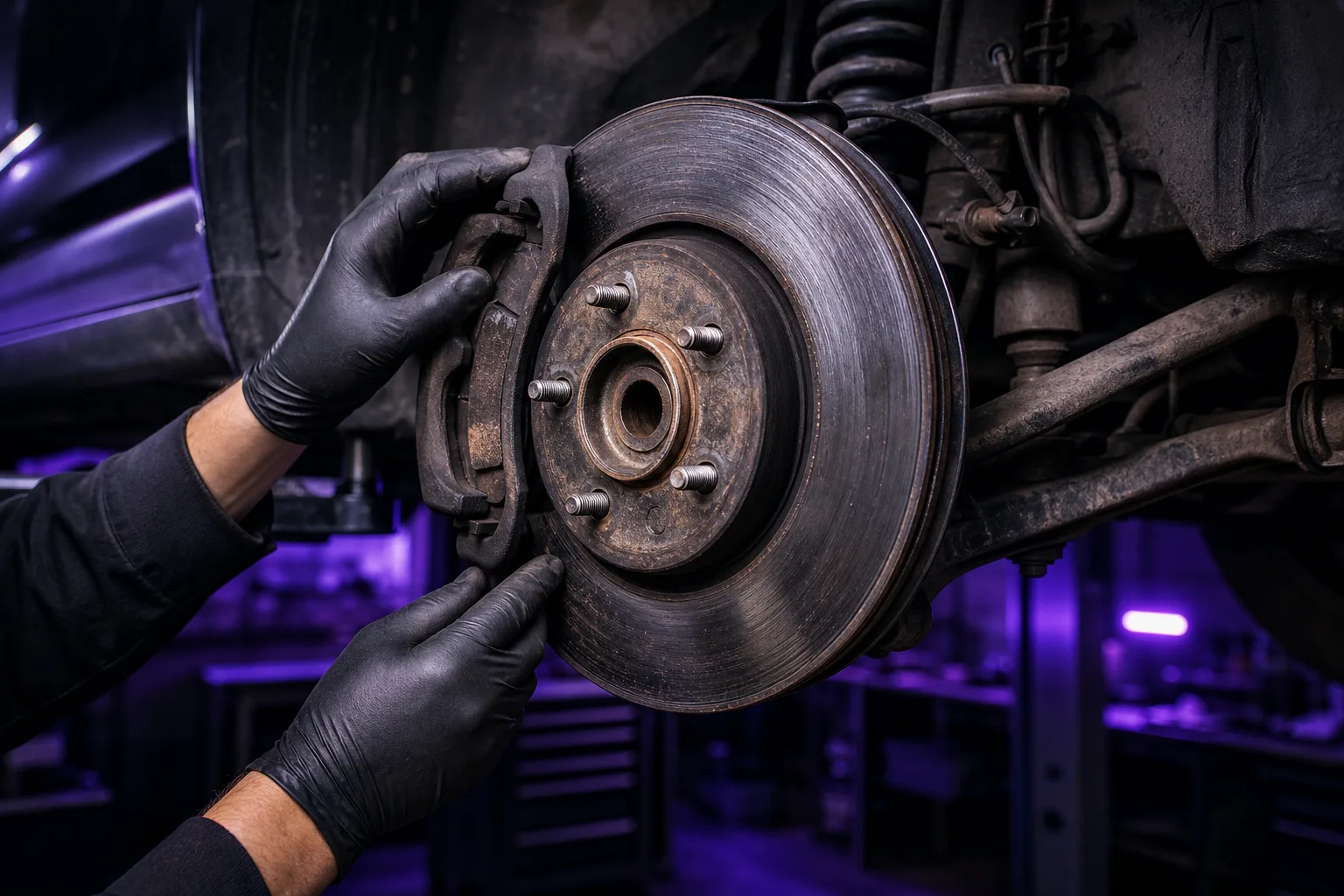
On many vehicles, brake pad thickness is visible through the wheel spokes without removing components. Pad material below three millimeters requires replacement. Uneven wear across the pad surface suggests caliper slide pin binding or a hydraulic restriction.
Inspect rotors for deep scoring, rust rings at the outer edge, or blue discoloration from overheating. Brake fluid should appear clear or light amber in the reservoir — dark fluid indicates moisture contamination and reduced boiling point under hard use.
When to Schedule Professional Inspection
- Any new noise, vibration, or pull appears during braking.
- Stopping distance increases noticeably compared to previous months.
- The brake warning light or ABS indicator illuminates on the dashboard.
- It has been more than twelve months since the last brake system inspection.
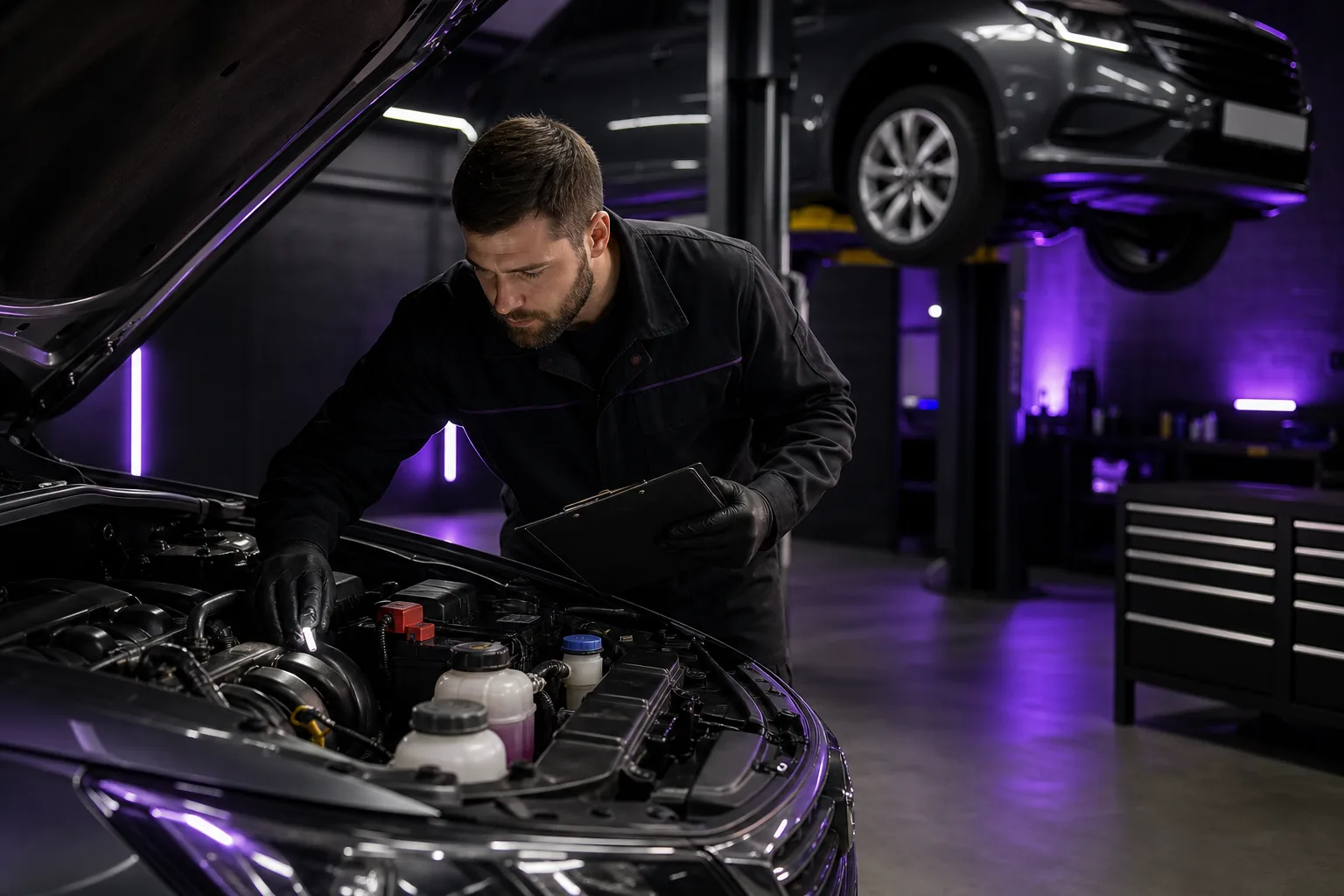
Our chassis specialists measure rotor thickness, caliper slide function, and hydraulic pressure during every brake inspection. Schedule a visit if you notice any of the symptoms described above.